
Running a Sex Offender Check in Los Alamos County
The New Mexico Department of Public Safety Law Enforcement Records Bureau manages the New Mexico DPS Sex Offender Registry. County agencies enter registration data in OffenderWatch, which generates the public search and transmits information to NCIC. Searchers can use a name path or an address, city, ZIP code, county, and radius path. Map and list views help answer different questions, while email notification can track later moves into a selected area.
Los Alamos County does not maintain a separate public list that replaces the state registry. LAPD and the elected sheriff functions share the local justice complex, but DPS controls translation and public release under state rules. Start with enough detail to distinguish people with similar names. For neighborhood awareness, use an address search as well as a name search. A blank result is not a final finding because some people convicted of sex offenses do not have a registration duty, and some registrants are not publicly releasable.
Los Alamos Registry Entry
Registration starts locally, but publication is a state function. A person who must register in Los Alamos County provides information through the county sheriff or LAPD channel at the Trinity Drive public-safety complex. The research did not confirm that the jail desk accepts unscheduled walk-ins, so call before arriving. The state Sex Offender Registration and Notification Act unit can be reached at dps.sorna@dps.nm.gov or 505-476-2444 for questions about classification, publication, or a record that seems absent.
A person moving into the county should bring the judgment and sentence and police report described by DPS. Timing depends on the conviction date and applicable offense rule. The state’s published framework uses a 14-day or aggregate 30-day threshold for certain pre-July 1, 2013 convictions, while post-July 1, 2013 offenders must register within five days. These are registration triggers, not a public risk score.
Los Alamos Registration Channel
2500 Trinity Drive
Los Alamos, NM 87544
505-662-8222
Call to confirm the registration office, appointment procedure, and documents before visiting.
Searching the New Mexico DPS Sex Offender Registry
OffenderWatch controls can change as the vendor updates the interface, but the state search supports both person and place questions. Use spelling variants and known aliases for a name search. For a location check, combine Los Alamos County, a city or CDP name, ZIP code, and the available radius control. Read the disclaimer before drawing a conclusion from the map or result list.
- Open the New Mexico DPS registry and read the conditions of use and public-release limits.
- Search by name with aliases or spelling variants, or use the address, city, ZIP, county, and radius path.
- Switch between map and list views. Compare a possible match with the profile photo, aliases, offense jurisdiction, and registration status.
- Subscribe to email notifications for future moves into the chosen area when that control is available.
- Cross-check the National Sex Offender Public Website when another state, tribal, territorial, or federal jurisdiction could hold the registration.
- Report suspected noncompliance to DPS or local law enforcement. Do not visit an address or investigate a registrant personally.
| Field Label | Type | Required | Notes |
|---|---|---|---|
| Name | Text | Optional | First and last name path; spelling variations and aliases may matter. |
| Address | Text | Optional | Street address for a proximity search. |
| City | Text or dropdown | Optional | Use Los Alamos or White Rock locality. |
| State | Dropdown | Address path | Select New Mexico. |
| ZIP code | Text | Optional | Five-digit ZIP code. |
| County | Dropdown | Optional | Select Los Alamos. |
| Radius | Dropdown | Address path | Use a vendor-provided distance shown in the current interface. |
| Search | Button | No | Submits the selected criteria. |
| Clear or Reset | Button | No | Clears the fields. |
| Map or List | Tabs or control | No | Switches between geographic and list presentation where enabled. |
| Email notifications | Signup | Optional | Provides proximity alerts when an offender moves into a selected area. |
Los Alamos Registry Translation
An out-of-state, tribal, federal, military, or foreign conviction does not move straight into a New Mexico public category by label alone. DPS translates it to the closest New Mexico statutory equivalent under 10.2.3 NMAC. The county sheriff first records the registration, but the county must not publish that person locally until DPS completes the translation. That sequence prevents a local office from guessing at the New Mexico classification.
The same division of labor explains a delay between registration and a public result. County entry → DPS offense translation → category and releasability decision → OffenderWatch publication is the practical flow. A searcher should ask the state SOR unit about classification or publication questions rather than assuming that a delay means noncompliance.
What a Registry Profile Shows
A public OffenderWatch profile combines identifying, address, offense, and compliance information that state law permits DPS to release. Exact fields vary by record. An omitted field may remain in agency files but be nonpublic, and an address should never be treated as an invitation to approach a person or property. Read the profile as a registration record tied to an offense rule, not as a generalized forecast of risk.
| Name and aliases | The published name plus known aliases or alternate spellings. |
|---|---|
| Photo and physical details | Current photograph; sex, race, age or date of birth where publishable; height, weight, hair, and eyes. |
| Registered location | Residence or address released under the governing public-information rule. |
| Offense information | Qualifying offense, jurisdiction, conviction date, and statute or description. |
| Category and frequency | The New Mexico operational registration category and required verification cycle. |
| Compliance status | The published registration or compliance status and related verification information. |
| Other public identifiers | Vehicle, work or school information where public, and identifying scars, marks, or tattoos. |
| Profile controls | Print, map, share, or notification options where the current interface enables them. |
Note: The absence of a field does not mean the agency lacks it; New Mexico law may keep that field from public view.
Missing Los Alamos Registry Results
No result does not prove that a person has no sex-offense conviction or no agency file. DPS notes that not every person convicted of a sex offense has a New Mexico registration duty, and not every registrant is publicly releasable. The record may also be under translation, registered in another jurisdiction, or found under an alias. Repeat the query by address and place, then use the national system when another jurisdiction may apply.
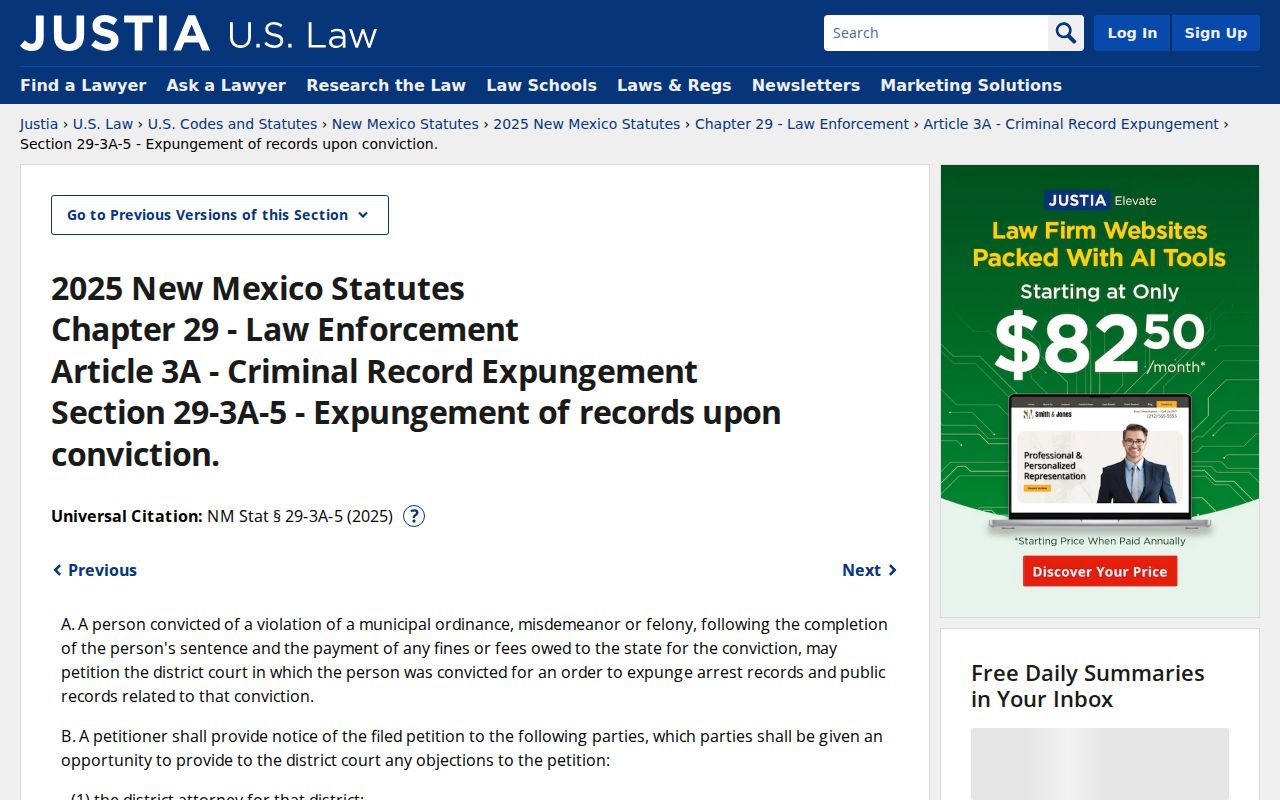
Criminal-record access and registry publication also arise under different statutes. The official New Mexico conviction-expungement petition law shows the separate framework used for qualifying court and arrest-record relief.
For a current registry question, rely on the status and release decision issued through DPS rather than drawing conclusions from a separate court-record search.
Registration Requirements and Levels in New Mexico
New Mexico DPS uses five operational classifications, not a generic Tier I, Tier II, and Tier III chart. Verification frequency and public release are separate features in several category names. Duration depends on the enumerated offense and the conviction or release date, so it cannot be inferred from frequency alone. Read the classification shown by DPS and contact the state SOR unit when the governing period is unclear.
| DPS classification | Verification and public implication |
|---|---|
| 90-Day Re-Registrants | Report every 90 days; releasability depends on governing offense and date rules. |
| 90-Day Non-Releasable | Frequent verification; not publicly released under the applicable category. |
| Annual Registrants | Annual verification; public treatment is governed by statute. |
| Annual Non-Releasable | Annual verification but not public under the applicable rule. |
| Semi-Annual Non-Releasable | Twice-yearly verification and non-releasable. |
People incarcerated or on probation or parole as of July 1, 1995 for a covered offense may have duties under the DPS description. A profile’s verification cycle should not be converted into an unofficial severity label. The underlying offense and statute control the obligation.
Los Alamos Registry Alerts
OffenderWatch can provide email notification when an offender moves into a selected neighborhood. A proximity alert is more useful for ongoing community awareness than repeating the same static search. Use an address and the current radius choices shown by the vendor, review each notice against the live profile, and remember that a move or data update may change the map.
The Department of Justice National Sex Offender Public Website supplies the cross-jurisdiction layer.
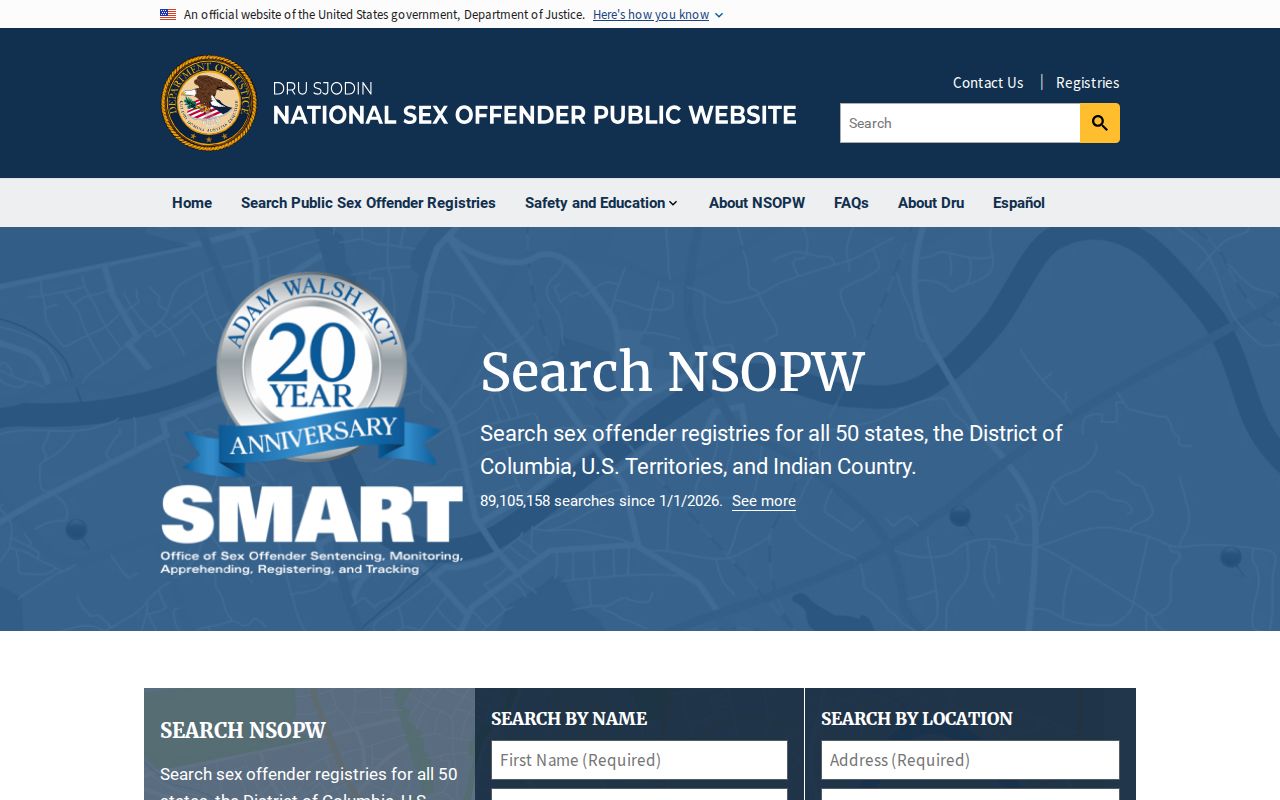
NSOPW is especially relevant around tribal and federal boundaries or when a person has moved, but each participating jurisdiction still controls its underlying public data.
Los Alamos Registry Residence Rules
New Mexico DPS expressly states that the state has no statewide residential distance restriction from schools or day-care facilities. Do not invent a universal buffer based on rules from another state. A person on probation or parole may have an individual special condition that limits residence or movement, but that supervision condition is not the same as a statewide registry rule.
Suspected violations of supervision conditions belong with the New Mexico Corrections Department Probation and Parole Division. Suspected failures to register belong with LAPD or the DPS SOR unit. Members of the public should provide factual information and allow the responsible agency to investigate.
Lawful Use and Community Notification
Registry information supports personal, family, neighborhood, and community safety planning. It does not authorize contact, surveillance, confrontation, threats, or punishment by private people. If a Los Alamos County profile appears wrong or a person seems to be missing, preserve the factual details and call local law enforcement or the DPS SOR unit. Emergencies go to 911. Section 29-11A-5.1 NMSA 1978 governs public registry information, while Section 29-11A-8 addresses registration compliance and penalties.
Use registry information lawfully: Misusing New Mexico registry information to threaten, harass, intimidate, or commit a crime is unlawful. See Sections 29-11A-5.1 and 29-11A-8 NMSA 1978. Never confront a registrant or visit a listed address.
Report suspected noncompliance to LAPD at 505-662-8222 or the DPS SOR unit at 505-476-2444. Give officers the name, location, profile issue, and other objective facts you observed. Let the agency decide what the law requires and whether enforcement is appropriate.